
Recent News
- ▶ Preventing Ocean Cargo Rust and Moisture Damage: Best Practices for Global Steel Shipping and Customs Clearance
- ▶ Stainless Steel Grade Selection: Comparing 304, 316L, and Duplex 2205 for Chemical and Marine Applications
- ▶ A Complete Guide to Structural Steel Rebar and Beams: ASTM vs BS vs EN Standards for Infrastructure Projects
- ▶ Essential Quality Control Checkpoints for International Steel Sourcing: From MTC Verification to Container Loading
- ▶ Galvanized vs Galvalume vs PPGI: How Modern Coating Technology Protects Steel in Harsh Environments
- ▶ A Comprehensive Guide to Selecting Steel Pipes for Industrial Pipelines: Seamless, ERW, LSAW, and SSAW
Message
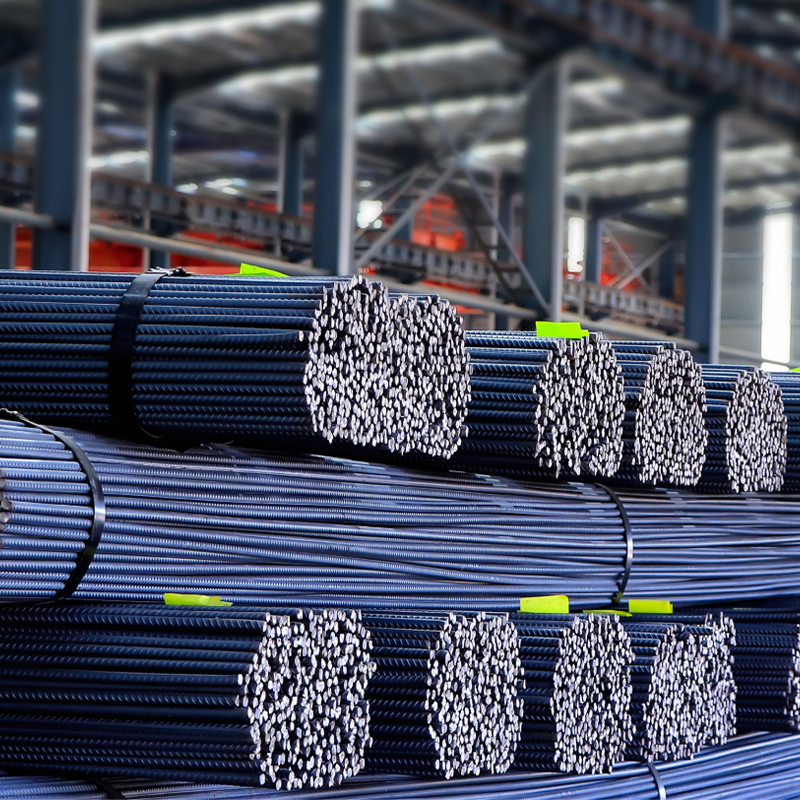
Introduction: Structural Steel as the Backbone of Global Infrastructure
In civil engineering and skyscraper construction, structural steel profiles—principally deformed reinforcing steel bars (rebar), universal H-beams, and I-beams—dictate the structural safety, seismic resilience, and service life of the entire project. Navigating varying regional technical standards (American ASTM, British BS, and European EN) is essential for procurement managers and structural engineers sourcing materials globally.
1. Concrete Reinforcing Steel Bars (Deformed Rebar)
Reinforcing bars provide vital tensile strength to concrete structures. When sourcing rebar, yield strength, ductility, and elongation are the primary mechanical benchmarks:
- ASTM A615 & ASTM A706 (American Standards):
- ASTM A615 Grade 60 (Minimum Yield Strength: 420 MPa / 60 ksi) is the global standard for general construction.
- ASTM A706 Grade 60 is specifically engineered with low carbon equivalent (CE) for critical seismic zones and applications requiring on-site field welding.
- BS 4449 & EN 10080 (British/European Standards):
- Grade B500B / B500C (Minimum Yield Strength: 500 MPa) offers superior strain ratio (Rm/ReH) and high elongation, making it mandatory for earthquake-resistant infrastructure across Europe, the Middle East, and Africa.
- Key Dimensions: Available from 8mm to 40mm, packaged in standard 6m, 9m, or 12m straight bundles or continuous coils for automated stirrup processing.
2. Structural Steel Beams: H-Beams vs I-Beams vs Universal Columns
While commonly used interchangeably by non-specialists, structural sections exhibit distinct load-bearing characteristics:
- H-Beams (Wide Flange): Features parallel inner and outer flanges with uniform thickness, delivering outstanding resistance to bending moments and torsional forces in multi-story columns and heavy industrial foundations.
- I-Beams (Standard Beams): Features tapered inner flanges with thinner webs, providing efficient performance for directional horizontal spans and secondary roof purlins where dead load must be minimized.
- Standard Grades: ASTM A36, ASTM A572 Grade 50, EN 10025 S275JR, S355JR, and S355J2.
3. Seismic and Low-Temperature Requirements
For infrastructure projects situated in seismic fault lines or Arctic/sub-zero climates, steel specifications must incorporate:
- High Ductility Ratio: Tensile-to-yield ratio (Rm/ReH) greater than or equal to 1.15 to ensure energy dissipation before fracture.
- Charpy V-Notch Impact Energy: Impact toughness verified at 0°C, -20°C, or -40°C (e.g., S355J2 or S355K2) to prevent catastrophic brittle failure.
Conclusion & Sourcing Best Practices
Ensure all rebar and structural beam shipments are accompanied by mill test certificates (MTCs) verifying chemical heat analysis, ladle analysis, and rib geometry compliance (relative rib area fR) to guarantee maximum bonding strength with concrete.
Leave A Message
If you are interested in our products and want to know more details, please leave a message here, we will reply you as soon as we can.