Recent News
- ▶ Stainless Steel The Passive Layer
- ▶ Stainless Steel Coil Calculate with Confidence
- ▶ Stainless Band economic safe and quality assured
- ▶ How Stainless Band serves the fastener and fixings industry
- ▶ From Strength to Strength in Stainless Steel Coil Products
- ▶ Duplex Stainless Steel Products from BS Stainless
Message
Introduction: Navigating the Complexities of Industrial Pipe Selection
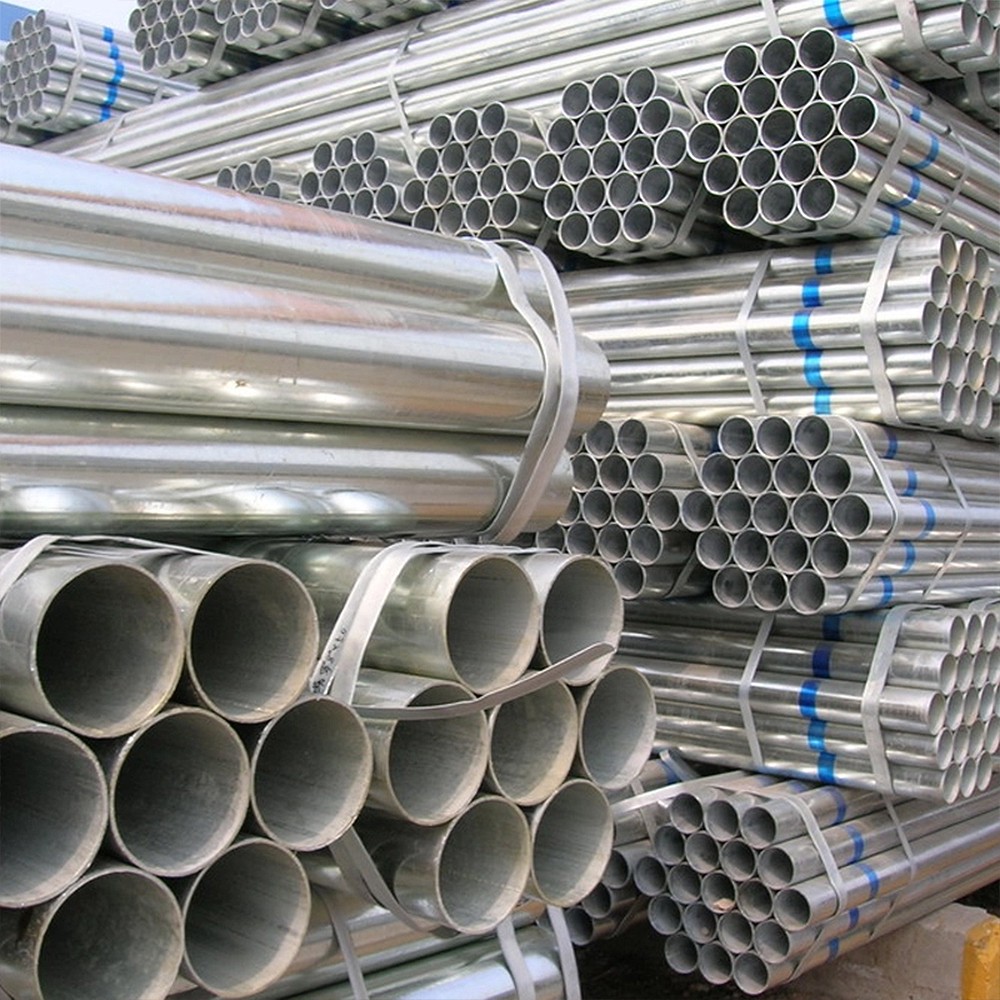
In oil, gas, chemical, water treatment, and structural engineering projects, selecting the appropriate steel pipe specification is crucial for balancing operational safety, mechanical performance, and total procurement budget. Steel pipes are broadly categorized by their manufacturing techniques: Seamless, Electric Resistance Welded (ERW), Longitudinal Submerged Arc Welded (LSAW), and Spiral Submerged Arc Welded (SSAW). Each variant delivers distinct mechanical advantages suited to specific pressure ratings, wall thicknesses, and diameter ranges.
1. Seamless Steel Pipes (SMLS)
- Manufacturing Process: Produced by piercing solid round steel billets followed by hot rolling, cold drawing, or extrusion, seamless pipes feature a completely uniform structure without longitudinal or circumferential weld seams.
- Standard Specifications: API 5L Grade B to X80, ASTM A106, ASTM A53, DIN 17175.
- Key Advantages: High pressure resistance, superior structural integrity, and resistance to uniform stress distribution.
- Primary Applications: High-pressure oil and gas exploration, high-temperature boiler lines, hydraulic systems, and critical offshore subsea piping (typically up to 24-inch outer diameter).
2. Electric Resistance Welded (ERW) Pipes
- Manufacturing Process: Fabricated from hot-rolled steel strip/coil shaped into a tubular cylinder and welded longitudinally using high-frequency electric resistance without adding filler metal.
- Standard Specifications: API 5L, ASTM A53, EN 10219.
- Key Advantages: High dimensional accuracy, uniform wall thickness, smooth surface finish, and cost-effective production in medium-diameter segments (typically 1/2 inch to 24 inches).
- Primary Applications: Low-to-medium pressure hydrocarbon transportation, municipal water supply, fire protection systems, and structural framing.
3. Longitudinal Submerged Arc Welded (LSAW) Pipes
- Manufacturing Process: Formed using single heavy-gauge steel plates via JCOE or UOE hydraulic bending processes, welded with submerged arc technology along a single longitudinal line.
- Standard Specifications: API 5L (PSL1 & PSL2, X42 to X80), ASTM A672.
- Key Advantages: Capable of handling extremely thick walls (up to 50mm+) and large diameters (16 inches to 56 inches), offering outstanding toughness and fatigue resistance in extreme climates.
- Primary Applications: Long-distance high-pressure onshore/offshore gas transmission trunks, deep-sea piling, heavy bridge construction, and thermal power plant main steam lines.
4. Spiral Submerged Arc Welded (SSAW) Pipes
- Manufacturing Process: Continuously formed from hot-rolled steel coil driven at a specific spiral angle and welded internally and externally using submerged arc welding.
- Key Advantages: Enables the production of extra-large diameter pipes (up to 120 inches / 3000mm+) from narrower steel strips, yielding significant raw material economies.
- Primary Applications: Long-distance water conveyance pipelines, low-pressure natural gas distribution, dredging, foundation casing, and civil infrastructure piling.
Conclusion & Procurement Considerations
When issuing Requests for Quotation (RFQs), project engineers and procurement managers must specify the design pressure, environmental conditions (such as sour service H2S or low-temperature impact tests), coating requirements (such as 3LPE, 3LPP, FBE, or HDG), and mandatory Mill Test Certificate (MTC) standards under EN 10204 3.1 or 3.2.
Leave A Message
If you are interested in our products and want to know more details, please leave a message here, we will reply you as soon as we can.